- Problems had built up for more than eight months: no clear goals, Quality Scores below 3, landing pages that did not match the ads.
- The fix was a restructure around the patient journey, keyword and Quality Score work, new landing pages and accurate tracking.
- Conversion rate rose from 7.95% to 19.95%, and the booking close rate from 15% to 55%.
- Cost per conversion fell by about 41%, from roughly AED 31 to AED 18.
In this article
What was brokenWhat we changedThe resultsWhat other hospitals and clinics can take from thisHealthcare is one of the most expensive categories on Google Ads, and Dubai is one of its most competitive markets. Hospitals compete with clinics, aggregators and each other for the same searches. When an account is not built well, cost per patient climbs quickly.
That was the situation at a multi-specialty hospital in Dubai. Spend was high, bookings were low, and the team could not tell which campaigns brought patients.
What was broken
When I audited the account, the problems had been building for more than eight months:
- Campaigns had no clear goal. Several departments and services were mixed together.
- Acquisition cost was high and rising.
- Quality Scores on the main keywords were below 3, so every click cost more than it should.
- Landing pages did not match the ads. Someone searching for a specific service landed on a general page.
- Conversion tracking was not accurate, so bidding was learning from the wrong signals.
- The conversion rate was around 7%.
Each of these problems on its own raises cost. Together, they meant the hospital was paying a premium for traffic that rarely became patients.
What we changed
1. A structure built around the patient journey
Campaigns were rebuilt by department and service, each with its own keywords, ads and budget. That made it possible to see the cost per booking for each service and move budget to where it worked.
2. Keywords and Quality Score
Keyword overlap was removed, irrelevant searches were excluded, and each ad group was written for a tight set of searches. Higher relevance raises Quality Score, which lowers cost per click and improves ad position.
3. Landing pages that match the search
Each service got a page that matched what the patient searched for: the service, the doctors, what to expect and a clear way to book. The first screen answered the main question and offered one action.
4. Accurate tracking
Calls, forms and WhatsApp were tracked as separate conversions, and only real booking actions were counted. Bidding could finally learn which searches brought patients.
The results
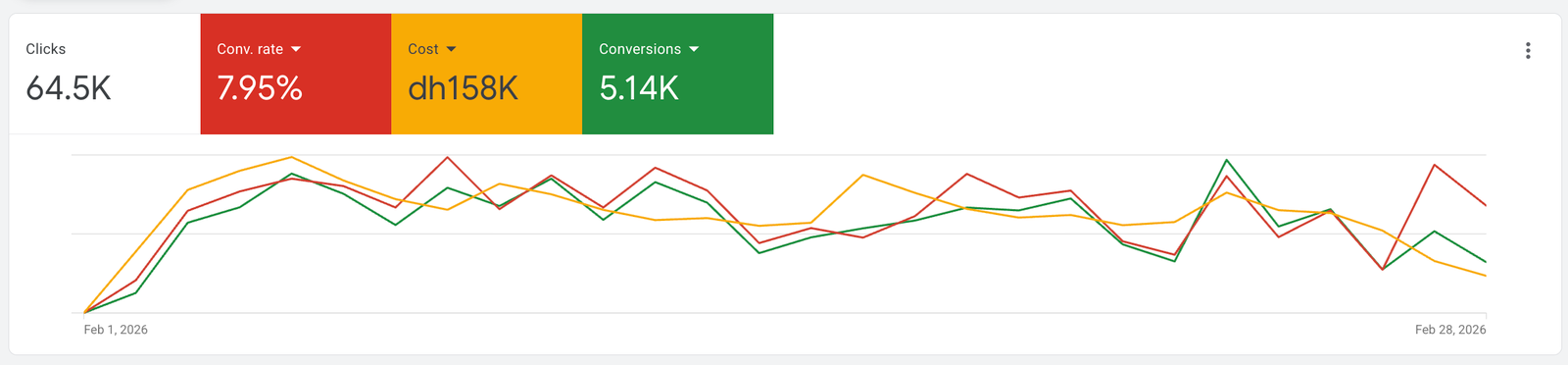
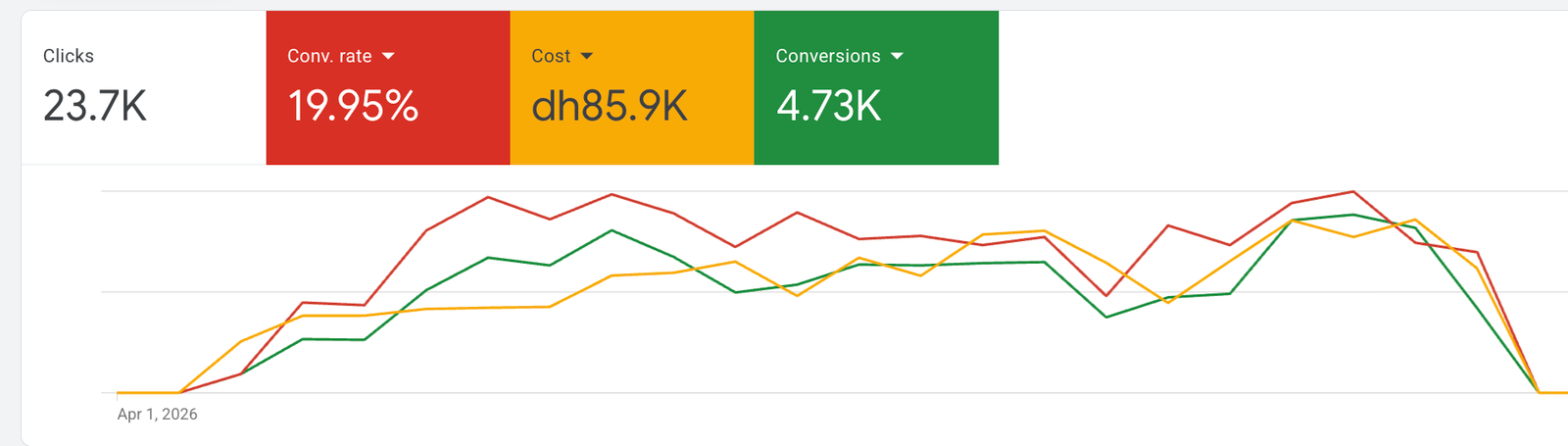
| Metric | Before | After |
|---|---|---|
| Clicks | 64.5K | 23.7K |
| Conversion rate | 7.95% | 19.95% |
| Cost | AED 158K | AED 85.9K |
| Conversions | 5.14K | 4.73K |
| Cost per conversion | ≈ AED 31 | ≈ AED 18 |
Look at the daily pattern in the April screenshot: campaigns were active for about three weeks of the month, so total spend is not a like-for-like comparison with February. The fair comparison is efficiency. Conversion rate rose from 7.95% to 19.95%, cost per conversion fell by about 41%, and the account produced almost the same number of conversions in fewer active days. The booking close rate, the share of enquiries that became booked appointments, rose from 15% to 55%, because the leads were better matched to the services they asked about.
What other hospitals and clinics can take from this
- Audit before you spend more. Most healthcare accounts that underperform have structural problems, not budget problems.
- Separate services. Each department or treatment needs its own campaign and page, so you can manage cost per patient.
- Fix Quality Score. Scores below 5 mean you pay more for every click than competitors with relevant ads.
- Match the page to the search. A general hospital homepage converts poorly for specific searches.
- Measure bookings, not clicks. Track calls, forms and WhatsApp, and feed confirmed bookings back where possible.
Healthcare advertising also has policy rules on Google and Meta. Ads must avoid restricted claims, and some treatments need certification. A good structure plans for this from the start.
If you run a hospital or clinic and want more patients for the same budget, see how I approach healthcare marketing, or start with a free audit of your Google Ads account.
Frequently asked questions
What is a good conversion rate for hospital Google Ads?
It depends on the service and how conversions are defined. In this case, the rate rose from 7.95% to 19.95% after the account was restructured and the landing pages were rebuilt.
Why is Google Ads so expensive for healthcare in Dubai?
Competition is high and cost per click is driven by relevance. Low Quality Scores make it worse, because you pay more than competitors for the same position.
How long does it take to fix a hospital Google Ads account?
The restructure and new landing pages can be done in a few weeks. Results improve as Quality Scores rise and bidding learns from accurate tracking, usually over the following one to three months.
Should a hospital use Google Ads or Meta?
Google captures patients searching for a service now. Meta builds awareness and works for some treatments. Most hospitals should start with Google and add Meta where it fits.

Performance marketing consultant since 2018, with more than $25M in managed ad spend across Google, Meta, TikTok and Snapchat for hospitals, clinics, online stores and service businesses.
View LinkedIn profile →